%20-%201%20-%20Edited%20(1).png)
Learning by Doing: How Project-Based Learning Inspires Young Minds
- UFS Editorial
- Mar 6
- 5 min read
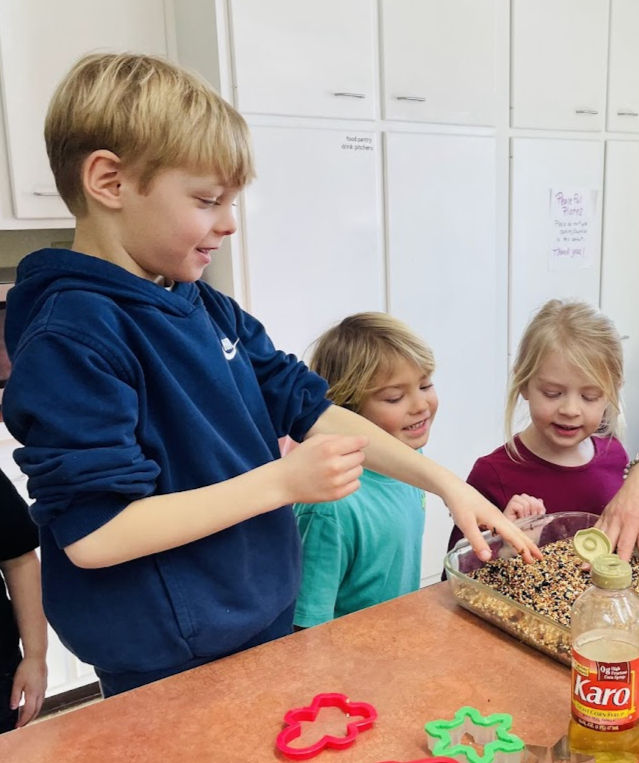
Many families today are looking for schools where children do more than memorize information. They want learning that feels meaningful, where children ask questions, explore ideas, and understand how different subjects connect to the world around them. One approach that supports this kind of learning is project-based learning (PBL), which invites students to dive into meaningful questions and real-world ideas through hands-on exploration, weaving together science, literacy, mathematics, creativity, and collaboration in purposeful, connected ways.
Project-based learning is woven into everyday classroom life at United Friends School, from our early learners through fifth grade, creating a joyful and purposeful learning journey at every stage. Students learn by building, experimenting, researching, discussing, and reflecting; strengthening their academic understanding while also growing in confidence and learning to share their ideas with purpose.
Just as importantly, this approach aligns naturally with Quaker values such as equality, respect, integrity, and reflection. Learning becomes not only about understanding academic concepts but also about practicing listening, collaborating, and contributing thoughtfully within a community.
Teachers build on students’ interests, turning curiosity, like testing ramps or exploring animals, into deeper investigations. These playful experiences help children develop curiosity, persistence, collaboration, and creative thinking.
Learning Through Curiosity and Creativity
Across our classrooms, project-based learning takes many forms, shaped by our students’ natural curiosity and creativity.

Early Learners: Exploring the World Around Them
For younger children, project-based learning often begins with play. Through building, storytelling, experimenting, and imaginative activities, children explore ideas, test outcomes, and develop language as they describe their discoveries.
In our 3- and 4-year-old program, children engage in hands-on experiences that spark curiosity and creativity. During a study of worms and soil, they observe how worms move, notice different soil layers, and learn why healthy soil is important. This exploration culminates in a playful “Mud Week,” when students paint, mix, and discover through sensory play. Through these activities, children develop early science skills, creativity, problem-solving, and a sense of wonder.
Beginning this June, even our littlest learners will join in through the new First Light Program for 1- and 2-year-olds. Toddlers will explore their environment, ask questions, and follow their natural curiosity—laying the foundation for a lifelong love of learning.
TK/Kindergarten: Reaching for the Stars
Transitional Kindergarten and Kindergarten students venture beyond the classroom into the vast wonder of space. During their study of the Solar System and Constellations, they explore the eight planets, noting their sizes, colors, and orbits. Hands-on models, movement activities, and interactive read-alouds bring these concepts to life.
Students also study constellations, discovering how cultures around the world have long told stories, marked seasons, and navigated by the stars. They even create their own constellations and stories, strengthening observation skills and creativity while connecting with Quaker values like stewardship and community.
Elementary Grades: Exploring Geography, Culture, and History
From first through third grade, students engage in projects that expand their understanding of the world. First graders learn about continents, building foundational geography skills. Second graders explore the thirteen colonies and early American communities. Third graders research individual states, studying state birds and regional cultures, then share their findings through persuasive posters that invite others to learn alongside them.
In fourth and fifth grades, students dive into ancient stories and cultures through Greek mythology, exploring literature, history, and discussion to understand themes and lessons in the myths. Yesterday, they extended their learning at the Penn Museum, where artifacts and exhibits brought these ancient cultures to life. In addition, fourth- and fifth-graders have been expressing themselves creatively through original poetry, reflecting on their ideas and experiences. These projects give students opportunities to engage deeply, connect ideas across subjects, and see the real-world relevance of their learning.
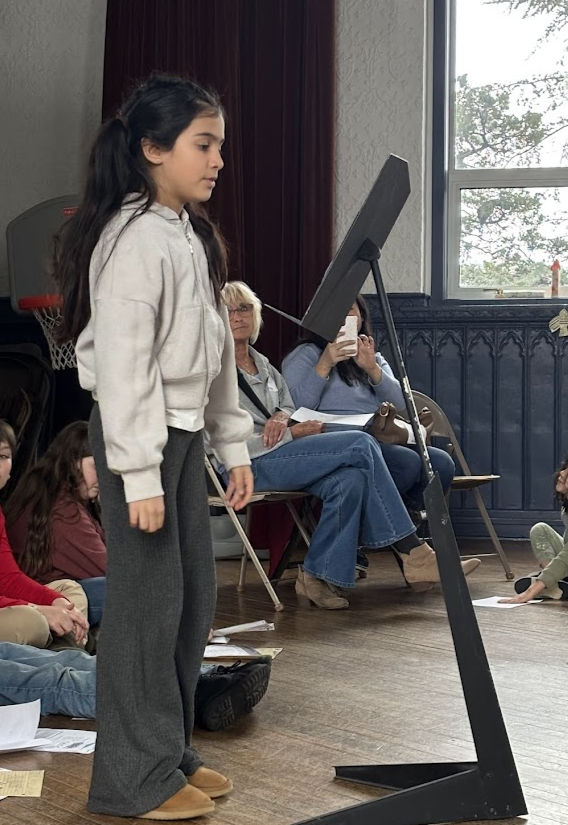
Click here to enjoy a beautiful poem created by one of our students.
In project-based learning, a single project can combine science, math, engineering, reading, writing, and creative thinking. Students see how these skills work together: reading to investigate, math to solve problems, writing to communicate, and creativity to refine ideas. This integrated approach encourages a deeper understanding, in which students apply knowledge rather than just memorize facts.
Learning by Doing
Project-based learning also recognizes something fundamental about how children learn: understanding grows through experience.
When students design something, test their ideas, revise their approach, and try again, they begin to see learning as an active process. They discover that mistakes are part of problem-solving and that persistence often leads to new insights.
Another project the United Friends School students completed was participating in a STEAM engineering challenge to design and build their own race cars. Using recycled materials, students explored how shape, weight, and structure influence movement. They tested their designs on ramps, observing how gravity, forces, and motion affected performance.


The project brought together several areas of learning at once. Students applied scientific thinking while experimenting with materials, used math concepts to compare results, and engaged in engineering design as they adjusted and improved their cars. The project also encouraged reading, writing, and discussion as students described their designs and reflected on what they learned from the process.
The race itself was exciting, but the deeper learning happened throughout the process of planning, building, testing, and refining ideas.

Every Voice Matters
A central principle in Quaker education is the belief that every person has inherent worth and something meaningful to contribute.
In the classroom, this belief translates into the idea that every voice matters.
Project-based learning creates space for students to share ideas, listen to one another, and build solutions together. Students collaborate to explore questions and develop projects.
Learning to respectfully discuss different perspectives, offer suggestions, and support one another’s thinking. These conversations help build confidence while also teaching students to listen carefully and consider new ideas.
This emphasis on shared learning strengthens both the academic experience and the classroom community.
Reflection and Thoughtful Learning
Reflection is another important part of both project-based learning and Quaker education.
After completing a project, or even during the process, students are encouraged to reflect on what they discovered, the challenges they faced, and how their ideas evolved. Reflection helps students recognize how learning happens and encourages them to approach future challenges with greater awareness.
This practice reinforces the idea that learning is not only about completing a project but also about understanding the process of inquiry and growth.

Preparing Students for a Complex World
When learning happens through hands-on projects, children start to see school as an adventure full of discovery, curiosity, and real-world connections.
They understand that subjects are connected. They experience how ideas can lead to action. They develop the confidence to test solutions, revise their thinking, and contribute to group work.
Most importantly, they learn to engage with ideas thoughtfully and respectfully, skills that reflect the deeper purpose of education in a Quaker community.
Through project-based learning, students experience education not as a collection of separate lessons, but as a dynamic process of exploration, collaboration, and discovery.
Visit and Experience UFS
Families curious about how project-based learning and Quaker values shape everyday learning are encouraged to visit campus and see classrooms in action. Our Admissions Office is buzzing with tours, visits, and new enrollment. Spaces are filling fast!
Contact Amy in the Advancement Office to schedule an information session and campus tour, begin the admissions process, and learn more about our programs. We are excited to welcome new families to our growing community and share how students explore, collaborate, and grow from the earliest years through fifth grade.


Comments